

 Log In

LAST UPDATED
Sep 22, 2026
READ TIME
11 min
LAST UPDATED
Sep 22, 2026
READ TIME
11 min
Ready to explore a remote area of the world famous for its vast wildernesses, diverse animal populations, deep blue skies and pristine natural beauty? You'll come back new® from an Alaska sailing with Princess Cruises®, voted the No. 1 cruise line in the region.
One aspect of a vacation to the state that you simply can't miss are Alaska glacier tours. These excursions will bring you up close to the icy-blue bergs that adventurers dream of, from North America's largest tidewater glacier to three-story icebergs that float past your cruise ship.
When you book an Alaska cruise, you'll enjoy a relaxing and memorable vacation with all the comforts and amenities that Princess Cruises® provides. Here are some of the most popular glaciers visitors explore on Alaska glacier tours.
Key takeaways
-
Alaska glacier tours can be experienced by sea, air or land, each offering a different perspective.
-
Popular glaciers visitors tour include - Hubbard Glacier, Endicott Arm Fjord and Dawes Glacier, College Fjord and Margerie Glacier.
-
Most glacier tours operate May through September, the peak Alaska travel season.
-
Excursions typically last 2–7 hours and often depart from hubs like Juneau.
-
Many tours offer chances to spot wildlife such as whales, seals and sea otters.
Must-see Alaska glaciers
Hubbard Glacier
Known locally as the "Galloping Glacier", Hubbard Glacier is a gigantic ice formation quickly making its way toward the Gulf of Alaska into a breathtaking area called Disenchantment Bay. Measuring 76 miles long with a depth of 1,200 feet, it's the largest tidewater glacier in North America. To give you a sense of the towering height of the glacier, it looms over passing cruise ships by nearly 40 stories.
Hubbard Glacier is so large that it created a natural ice dam that sealed off Russell Fjord from the rest of the bay—a feat it accomplished not once, but twice. Enormous snowcapped mountains set behind Hubbard Glacier make viewing the glacier even more dramatic. Keep an eye out for glacial calving, which is when large pieces of ice break off a glacier and crash into the ocean or water below. At Hubbard, these icebergs can tower 10 stories tall as they hit the water.


Start your Alaska adventure
Endicott Arm Fjord and Dawes Glacier
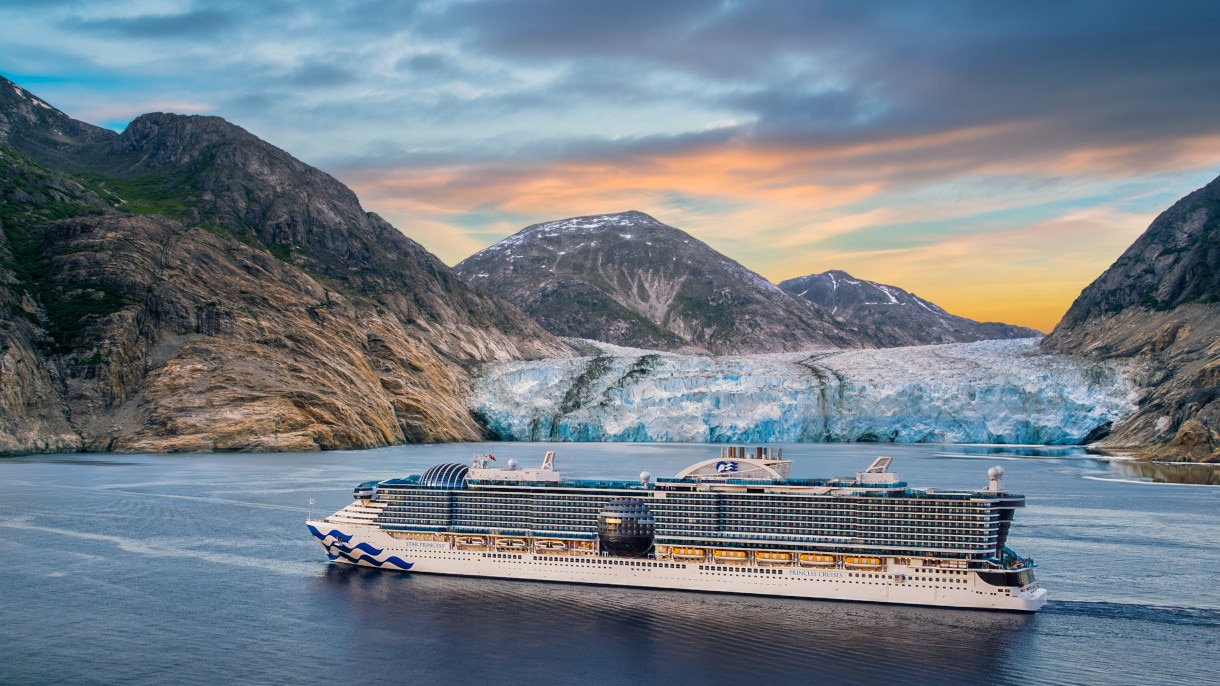
Tucked into Southeast Alaska about 50 miles south of Juneau, Endicott Arm is a 30-mile fjord that winds through the Tracy Arm-Fords Terror Wilderness, one of the most remote stretches of coastline you can reach by ship. As you sail deeper into the narrow channel, sheer granite walls rise straight out of the water, waterfalls spill down from the cliffs above and the sea itself shifts from gray to a milky jade green, colored by glacial silt. Floating ice grows thicker and larger the closer you get, with harbor seals often stretched out on the passing floes.
At the head of the fjord waits Dawes Glacier, an active tidewater glacier with a face roughly 0.5 miles wide and several hundred feet tall. It calves frequently, and you may hear the crack of "white thunder" echo off the canyon walls before you spot the ice hitting the water. Keep watch for bald eagles perched in the evergreens and humpback whales surfacing alongside the ship. Princess also offers two catamaran excursions here, a three-hour trip and a six-hour version, if you want to get even closer to the glacier face.
College Fjord
College Fjord was discovered in 1899 when a college research expedition made its way into the northwest corner of Prince William Sound. Theis group of adventuring professors selected the name College Fjord to honor their prestigious academic institutions back on the East Coast. The fjord appears like a group of frozen rivers cascading down the mountainside to the blue waters. Here, you can also witness large chunks of ice crashing into the water below – known as ice calving.
College Fjord is also the largest collection of tidewater glaciers in the world, making for truly bucket-list worthy glacier viewing. You may even catch a glimpse of 40-ton humpback whales breaching the waters around the fjord.

Margerie Glacier
Few glacier views in Alaska rival Margerie Glacier, the star attraction of Glacier Bay National Park. Once part of the neighboring Grand Pacific Glacier, Margerie separated in the 1990s and now stands on its own as roughly 21 miles of ice ending in a wall of powder blue that towers over the water. It also has one of the most active glacial faces in the park, so calving is a common sight. When your ship arrives, it slowly rotates a full 360 degrees so every guest gets the same front-row view, no matter which side of the ship your stateroom is on.
Glacier Bay is a UNESCO World Heritage Site spanning 3.3 million acres and home to more than 1,000 glaciers, and the National Park Service limits how many ships may enter each day. As the #1 Alaska cruise line, Princess holds one of those select permits, so the experience feels remarkably uncrowded. Ships typically spend around eight hours in the park, including about an hour at the face of Margerie. National Park Rangers come aboard to narrate from the bridge and answer questions on deck, while you scan the shoreline for brown bears, humpback whales, sea otters and mountain goats.
Three unique ways to experience Alaska glaciers
Most Alaska glacier tours are experienced in three main ways: by cruise, by air or by land.
1. By land on a hike
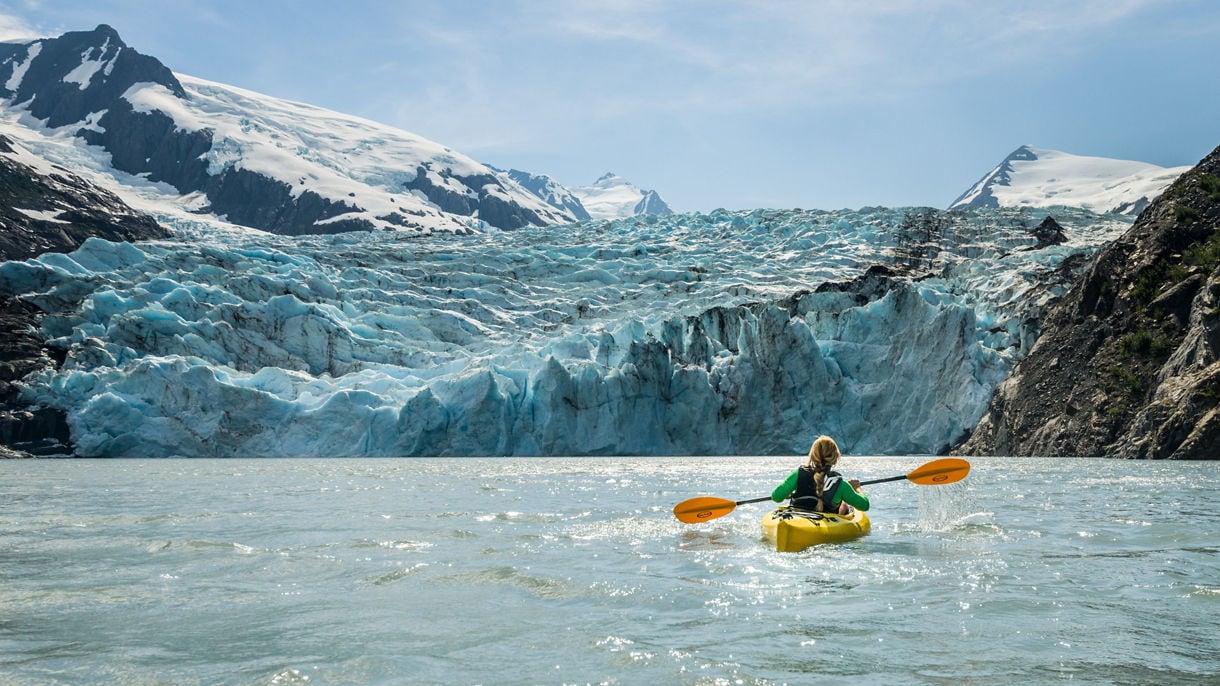
For those seeking an up-close encounter, glacier hiking offers a thrilling adventure on solid ice. Guided tours lead you across the rugged terrain to see glaciers such as Mendenhall. Exploring the glacier on foot allows you to appreciate the scale and texture of these natural wonders in a way that few other methods can match.

3. By sea during a cruise
A glacier cruise presents a unique opportunity to experience Alaska’s icy marvels from the water. These cruises navigate close to tidewater glaciers, allowing you to witness the calving process—where chunks of ice break off and plunge into the sea. Wildlife sightings are common on Alaska glacier tours, especially in coastal fjords and protected waterways. Cruises provide the chance to view glaciers from the sea while enjoying the comfort of a boat and the opportunity to spot marine wildlife such as humpback whales, sea otters, harbor seals and orca whales.

2. By air from a flightseeing tour
Glacier flightseeing tours take you over colossal ice fields and rugged mountain ranges, offering sweeping views of the dynamic landscape from the comfort of a small plane or helicopter. This bird's-eye view reveals the stunning contrasts between ice and rugged terrain and allows you to see remote glaciers that are otherwise inaccessible. Flightseeing provides an unforgettable visual experience, allowing you to witness the immense size of glaciers like the Mendenhall, and the breathtaking scope of Alaska’s glacial beauty.

Alaska glaciers
Most glacier excursions last between 2 and 7 hours depending on whether you explore by boat, helicopter or guided hike. Beauty, excitement and adventure await when you book an Alaska glacier tour as part of a cruise with Princess Cruises®. Begin your journey to the state's most amazing glacier formations and discover other notable attractions like wildlife-rich fjords, lush rainforests and historic port towns along the way. Most tours depart from major Alaska cruise ports such as Juneau, Whittier and areas near Anchorage.
-
 Glacier Explorer
Mendenhall Glacier Explorer
Book now3 hours | Juneau
-
Exploration
Hubbard Glacier & Wilderness Exploration
Book now2 hours | Hubbard Glacier (Scenic Cruising)
-
Helicopter & Guided Walk
Mendenhall Glacier Helicopter & Guided Walk
Book now2.25 hours | Juneau
-
Explorer Cruise
Tracy Arm Fjord & Glacier Explorer Cruise
Book now7.25 hours | Juneau
-
Glacier Explorer
Mendenhall Glacier Explorer
Book now3 hours | Juneau
-
Exploration
Hubbard Glacier & Wilderness Exploration
Book now2 hours | Hubbard Glacier (Scenic Cruising)
-
Helicopter & Guided Walk
Mendenhall Glacier Helicopter & Guided Walk
Book now2.25 hours | Juneau
-
Explorer Cruise
Tracy Arm Fjord & Glacier Explorer Cruise
Book now7.25 hours | Juneau
Alaska glacier tours FAQs


