

 Log In

LAST UPDATED
Mar 23, 2026
READ TIME
15 min
LAST UPDATED
Mar 23, 2026
READ TIME
15 min
Key takeaways
- Glacier Bay National Park offers one of the most immersive scenic cruising experiences on an Alaska cruise.
- Multiple tidewater glaciers, protected wildlife habitats and ranger-led narration set it apart from other glacier stops.
- Access to Glacier Bay National Park is limited, so choosing the right cruise line matters—Princess Cruises is among the few permitted to sail into the park.
What makes Glacier Bay National Park different from other Alaska cruise stops?
Glacier Bay National Park is a federally protected wilderness area in southeast Alaska. It includes a deep fjord system formed by retreating glaciers and is managed by the National Park Service. Cruise ships with proper permits are allowed to enter the park to provide guests with a scenic experience along the bay’s waterways, and Princess® is one of the select few cruise lines to include Glacier Bay National Park on certain Alaska cruise itineraries.
Cruises to Glacier Bay National Park are “scenic cruises.” What does that mean? Well, think of it as nature’s grand slow tour. Ships spend the day gliding through the bay while you take it all in from your favorite perch. It’s like if a sea day and a port day had a baby; the water is the destination.

Start your Alaska adventure

Experience multiple glaciers in a single day of scenic cruising
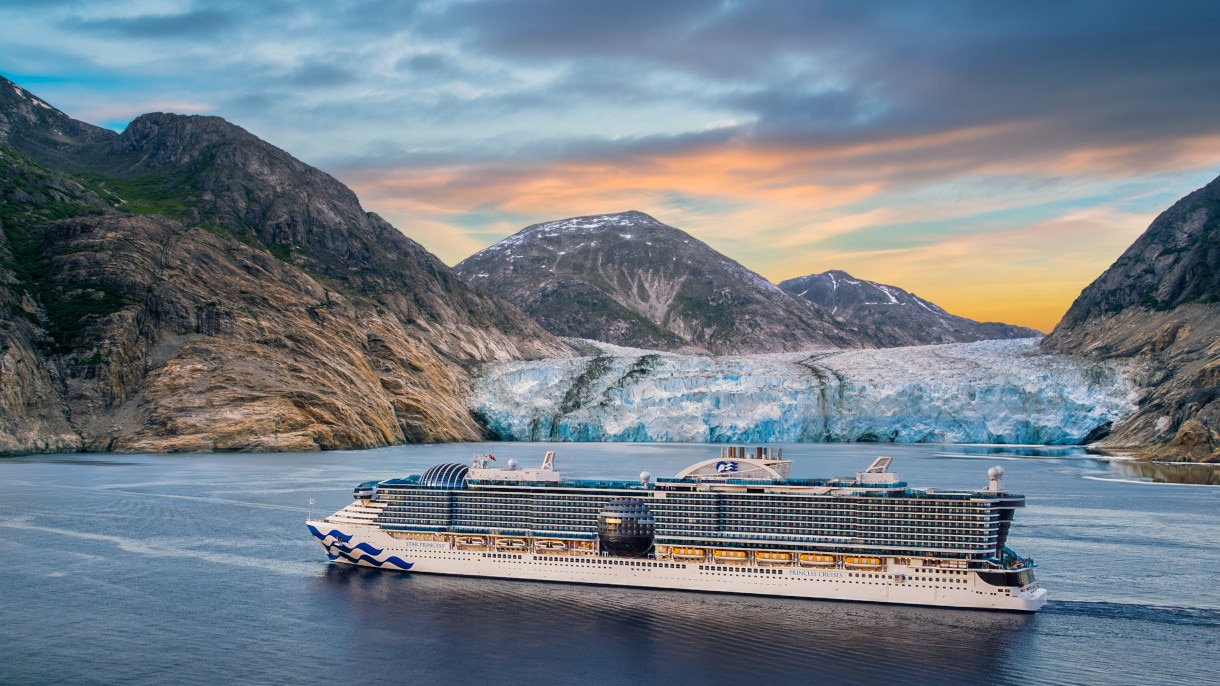
Sailing to Glacier Bay National Park provides uninterrupted access to tidewater glaciers, snow-capped peaks and marine ecosystems. In other words, you’ll spend hours sailing past glacier-fed inlets, forested slopes and imposing cliffs that rise straight out of the water.
Cruise deep into a protected fjord system
The bay extends from its entrance to the glacial areas at its north end. As your ship sails into the fjord system, you pass coastal mountains, old-growth forests, and sheltered inlets. The route feels more like a backstage pass than a drive-by. It winds through protected waters with mountain walls rising around you.
Witness several tidewater glaciers up close
Looking to see more than one glacier in a single day? Glacier Bay National Park offers several. The park contains multiple tidewater glaciers, including Margerie Glacier, Johns Hopkins Glacier and Grand Pacific Glacier. These glaciers terminate in the sea, and ships typically pause in front of at least one of them during the visit. Calving events may be visible. That’s where pieces of the glacier break off and fall into the water… but that description hardly does it justice when you consider that these pieces may consist of several tons of ultradense ice that hit the water with the force of a depth charge and a sound like sea-level thunder.
These tidewater glaciers are remnants of a massive river of ice that filled the entire bay as recently as 1750. Since then, the ice has retreated more than 60 miles, uncovering fjords, valleys and new ecosystems along the way. What was once a single ice sheet has separated into multiple individual glaciers that now flow from the surrounding mountains to the sea.

Learn from National Park Rangers on board
During your visit to Glacier Bay National Park, rangers from the National Park Service join your cruise ship. They come aboard with stories, science and park secrets. You’ll learn a lot (and maybe earn a Junior Ranger badge while you’re at it).
Gain insight through ranger-led narration
Rangers board in the early morning and remain on the ship for most of the day. They share live commentary through the ship’s announcement system, offering information about glacial activity, park history and ecological dynamics. These experts usually set up an information desk where guests can ask questions, collect Junior Ranger materials or browse educational displays.
Understand Glacier Bay National Park’s cultural and environmental significance
Glacier Bay National Park is the traditional homeland of the Huna Tlingit. Many place names and stories from the area reflect this cultural heritage. The Huna Tribal House, located near Bartlett Cove, represents a collaboration between the Huna community and the National Park Service. The park is also part of a UNESCO World Heritage Site and a designated Biosphere Reserve, which supports ongoing ecological research and conservation.

See Alaska wildlife in a protected natural habitat
The protected status of the bay supports a wide range of wildlife. Guests on cruise ships can observe marine mammals, coastal birds and land animals (bears, anyone?) in their native environments.
Spot marine mammals along the shoreline
Keep your eyes on the water. Humpbacks flip, sea otters float, and harbor seals strike poses on ice like they’re working the runway. The calm, food-rich waters support feeding and breeding activity during the summer months. Whales often surface near the ship, and seals may be spotted resting on floating ice. Visit the NPS wildlife page for a full list of species commonly observed.
Watch for birds and land animals near the glaciers
Ornithophiles take note: the park is home to more than 280 bird species, including bald eagles, kittiwakes, murrelets and puffins. Along the shoreline, guests may see mountain goats on steep slopes or bears foraging near tidal flats. Wildlife often appears small from the deck of a cruise ship, so binoculars are recommended. Glacier Bay National Park’s location and lack of development help maintain stable wildlife populations.

Why Glacier Bay National Park is a must for first-time Alaska cruises
For guests taking their first Alaska cruise, Glacier Bay National Park offers a full day of glacier viewing, wildlife observation and expert interpretation (that’s where rangers from the National Park Service give you background and other insights into what you’re looking at). This setting introduces the region’s landscapes and ecosystems in one destination.
Glaciers, wildlife and education in one destination
Glacier Bay National Park presents multiple elements of Alaska’s natural environment. Guests can view glaciers, mountains and marine animals without transferring between locations or booking separate excursions. Onboard ranger commentary enhances the experience with insight into the landscape and its changes over time.
Glacier Bay National Park vs. single-glacier cruise experiences
Some Alaska cruises include a brief viewing stop at one glacier. In Glacier Bay National Park, the ship spends several hours navigating through a series of glacial inlets, with time allocated at each location for photography and observation. The extended route allows for broader exposure to the region’s features.
Cruise access and permit restrictions in Glacier Bay National Park
Not every ship gets an invite to Glacier Bay National Park. The National Park Service keeps a tight guest list (and for good reason — this is an important natural ecosystem, after all). If you’re interested in visiting Glacier Bay National Park during your Alaska cruise, it’s worth understanding how the access system works and how to identify permitted itineraries.
- Entry is limited by daily permits
The National Park Service allows only two large cruise ships per day into Glacier Bay National Park. This limit helps protect the park’s wildlife, reduce vessel traffic and maintain the quality of the visitor experience. - Cruise ships must hold a valid permit
Each cruise line that enters the bay must hold authorization from the National Park Service. These permits are granted based on environmental planning and operating criteria. - Princess Cruises is a long-time permit holder
Princess Cruises is among the few lines consistently authorized to enter Glacier Bay. Itineraries labeled with Glacier Bay National Park include a full day of scenic cruising inside the park.
Not all Alaska cruises include Glacier Bay National Park
Many Alaska cruises visit other scenic areas but do not enter Glacier Bay National Park. Always check itinerary details to make sure you don’t miss out on this destination.
Planning a Glacier Bay National Park visit on an Alaska cruise
Itineraries that include Glacier Bay National Park benefit from some advance planning. Here are some tips to help you get the most out of your time in this one-of-a-kind destination:
Choose itineraries that include a full day in Glacier Bay National Park
Ships typically enter the park in the morning and exit in the afternoon, with a route that includes several major glaciers. Details about ship timing and glacier stops are provided on board. Visit the Glacier Bay National Park Service site for a more detailed overview of what to expect.
Know the best time of year to visit Glacier Bay National Park
Most cruises to Glacier Bay National Park visit the park May through early September, which offers better overall visibility and wildlife activity (with may enjoying drier weather than the later summer months). These months align with the peak feeding period for whales and the seasonal presence of seals and nesting seabirds. Temperatures are mild and days are long, which supports outdoor viewing from the decks. Weather conditions are variable. Guests should bring rain gear and warm layers.
Prepare for a full day of scenic cruising
As previously stated, ships do not dock at Glacier Bay National Park. Guests spend the day on board and should plan for outdoor viewing. You won’t need hiking boots, but you will want warm layers, a camera and maybe your lucky whale-watching hat. And don’t worry: Rangers announce glacier viewing times and other highlights through the ship’s PA system, so you won’t have to stay on deck all day for fear of missing out.

Glacier Bay National Park compared to other Alaska glacier destinations
There are several glacier-viewing destinations in Alaska. Each spot has its own calling card. Some show off their size, some are part of larger itineraries, and Glacier Bay National Park gives you a bit of everything: route length, protected status and real-time narration from experts.
- Glacier Bay National Park offers multiple tidewater glaciers, extended scenic cruising, and live narration from National Park Service rangers. It is a protected area with limited cruise ship access and is part of a UNESCO World Heritage Site.
- Hubbard Glacier is typically viewed from open water. It is one of the largest tidewater glaciers in North America and is known for dramatic calving events.
- Endicott Arm features a narrow inlet and steep surrounding cliffs. Cruise access can be limited by ice conditions, but it includes close views of Dawes Glacier.
- College Fjord includes several glaciers named after East Coast schools. The area is undeniably scenic, and you’ll pass a lineup of glaciers in a relatively short stretch.
How to get the best views of Glacier Bay National Park on your cruise
A day at Glacier Bay National Park is all about the views, and a little planning can go a long way. Booking a balcony stateroom gives you the flexibility to step outside whenever the scenery shifts, whether that’s your first glimpse of a glacier or one of those dreamlike moments as the ship moves through the fjords.
Princess’ Glacier Bay National Park itineraries are also designed to make sure everyone gets a great look. When you arrive at Margerie Glacier, the ship slowly rotates so both sides take turns facing the ice, giving all guests a chance to enjoy the view. Many onboard activities are also paused during this time, creating a quieter atmosphere that keeps the focus where it belongs: on the glaciers, the wildlife and the experience unfolding just beyond the rail.
Plan your Glacier Bay National Park experience with Princess Cruises
After a day of slow sailing through fjords, glacier spotting from the deck and learning from park rangers along the way, it’s easy to see why Glacier Bay National Park leaves such a lasting impression. It’s part sea day, part sightseeing adventure and all Alaska.
If Glacier Bay National Park is high on your cruise wish list, be sure to look for itineraries that include a full day of scenic cruising inside the park. With limited access and unforgettable views, it’s one experience worth planning around.
Frequently asked questions about Glacier Bay National Park cruises

