Temples of Nara
Strenuous Activity
Includes meal
Shopping Opportunities
Be sure to read the Special Notes further down this page for important requirements and restriction.
Board your motorcoach for this full-day excursion through Nara and prepare to explore the historic spiritual and natural beauty of this region of Japan.
Your motorcoach will wind its way to Nara, once considered the cradle of Japanese art and culture during the Tempyo Period (710–784). Your first stop at Yakushiji Temple constructed by Emperor Tenmu in the late 7th century in the hope of the recovery of the emperor's sick wife. One of Japan's oldest temples, Yakushiji has a strictly symmetric layout, with the main and lecture halls standing on a central axis, flanked by two pagodas.
The main hall was rebuilt in the 1970s after being destroyed by fire, and houses a Yakushi trinity, a masterpiece of Japanese Buddhist art. The East Pagoda is the temple's only structure to have survived the many fires and dates from 730. It appears to have six stories, but is in fact three storied, like the West Pagoda.
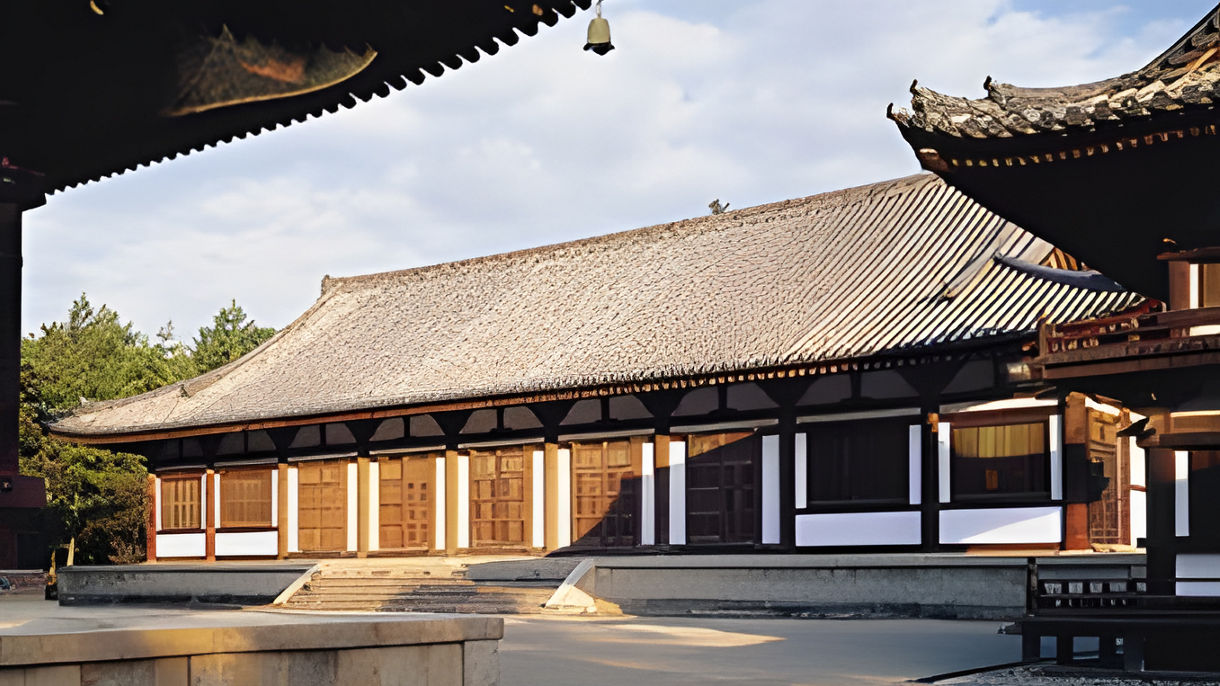
Your second stop is a visit to the Toshodaiji Temple founded in the year 759 by Ganjin, a Chinese priest who was invited to Japan by the emperor in order to train priests and improve Japanese Buddhism. "Toshodai" is Japanese for "invited from Tang China", which refers to Ganjin. His influence in the introduction of Buddhism to Japan was monumental and his arrival and teaching at Toshodaiji were important stages in that process. Toshodaiji's main hall (kondo) was re-opened in late 2009 after being renovated over a period of almost ten years, during which the building was dismantled and reconstructed.
A lunch of Japanese style cuisine awaits at a nearby restaurant.
After lunch stop, you'll stop at the Todaiji Temple, a UNESCO World Heritage Site and the headquarters of the Kegon school of Japanese Buddhism. It is one of the country's most famous and historically significant temples, first built on this site in the year 728. Today, the immense Great Buddha Hall at Todaiji, which was the world's largest wooden building until 1998, holds a bronze Great Buddha statue that is nearly 50 feet tall and weighs 500 tons!
One thing you will notice on the grounds are the sika deer that roam freely. These large spotted deer are considered messengers of the gods in the Shinto religion and so are given free reign. Deer can be seen throughout Nara, particularly in verdant Nara Park, where vendors even sell "deer biscuits" that the deer will eat right from your hands!
At the end of the day, you'll travel from Nara back to your ship.
Schedule
Special Notes
The drive between Kobe and Nara is approximately 90 to 110 minutes. Passengers should expect traffic and delays. The order of the tour may vary.
This tour involves a substantial number of steps and uphill walking. Motorcoaches must remain in the parking area. Especially, Todaiji Temple, the guest requires to walk from Parking to the area of temple 10-15min half way with narrow path and then walk through inside of temple area so totally more than 1km walk is required.Yakushiji Temple also need to walk about 5min from the parking to the entrance of Temple.
At Toshodaiji temple, taking photo of inside building/designated area is not allowed.
We suggest you carry local currency.
This tour contains a lot of walk on gravel path, hilly path at all temples/shrine. Not recommended for guests with walking difficulties or mobility aids.
Exceptional Value
Book shore excursions with confidence! We offer competitive pricing, friendly service and unmatched destination expertise.
Strenuous Activity
Includes meal
Shopping Opportunities
Be sure to read the Special Notes further down this page for important requirements and restriction.
Board your motorcoach for this full-day excursion through Nara and prepare to explore the historic spiritual and natural beauty of this region of Japan.
Your motorcoach will wind its way to Nara, once considered the cradle of Japanese art and culture during the Tempyo Period (710–784). Your first stop at Yakushiji Temple constructed by Emperor Tenmu in the late 7th century in the hope of the recovery of the emperor's sick wife. One of Japan's oldest temples, Yakushiji has a strictly symmetric layout, with the main and lecture halls standing on a central axis, flanked by two pagodas.
The main hall was rebuilt in the 1970s after being destroyed by fire, and houses a Yakushi trinity, a masterpiece of Japanese Buddhist art. The East Pagoda is the temple's only structure to have survived the many fires and dates from 730. It appears to have six stories, but is in fact three storied, like the West Pagoda.
Your second stop is a visit to the Toshodaiji Temple founded in the year 759 by Ganjin, a Chinese priest who was invited to Japan by the emperor in order to train priests and improve Japanese Buddhism. "Toshodai" is Japanese for "invited from Tang China", which refers to Ganjin. His influence in the introduction of Buddhism to Japan was monumental and his arrival and teaching at Toshodaiji were important stages in that process. Toshodaiji's main hall (kondo) was re-opened in late 2009 after being renovated over a period of almost ten years, during which the building was dismantled and reconstructed.
A lunch of Japanese style cuisine awaits at a nearby restaurant.
After lunch stop, you'll stop at the Todaiji Temple, a UNESCO World Heritage Site and the headquarters of the Kegon school of Japanese Buddhism. It is one of the country's most famous and historically significant temples, first built on this site in the year 728. Today, the immense Great Buddha Hall at Todaiji, which was the world's largest wooden building until 1998, holds a bronze Great Buddha statue that is nearly 50 feet tall and weighs 500 tons!
One thing you will notice on the grounds are the sika deer that roam freely. These large spotted deer are considered messengers of the gods in the Shinto religion and so are given free reign. Deer can be seen throughout Nara, particularly in verdant Nara Park, where vendors even sell "deer biscuits" that the deer will eat right from your hands!
At the end of the day, you'll travel from Nara back to your ship.
Schedule
Special Notes
The drive between Kobe and Nara is approximately 90 to 110 minutes. Passengers should expect traffic and delays. The order of the tour may vary.
This tour involves a substantial number of steps and uphill walking. Motorcoaches must remain in the parking area. Especially, Todaiji Temple, the guest requires to walk from Parking to the area of temple 10-15min half way with narrow path and then walk through inside of temple area so totally more than 1km walk is required.Yakushiji Temple also need to walk about 5min from the parking to the entrance of Temple.
At Toshodaiji temple, taking photo of inside building/designated area is not allowed.
We suggest you carry local currency.
This tour contains a lot of walk on gravel path, hilly path at all temples/shrine. Not recommended for guests with walking difficulties or mobility aids.