Best of Split & Diocletian Palace
Moderate Activity
Includes meal
Be sure to read the Special Notes further down this page for important requirements and restriction.
What you will visit:
Split:
Medieval Split was built for the emperor Diocletian in his retirement, and the charms of the Dalmatian Riviera offer a blend of natural beauty and fascinating cultural sites to travelers today. The city itself is at least 1,700 years old, although recent archaeological research suggests that it might date back as far as the 6th century B.C. Enter Diocletian's Palace through its impressive arches and stroll around this 4th-century wonder that boasts grand courtyards, restaurants, shops, and narrow cobbled lanes.
The Palace of Diocletian:
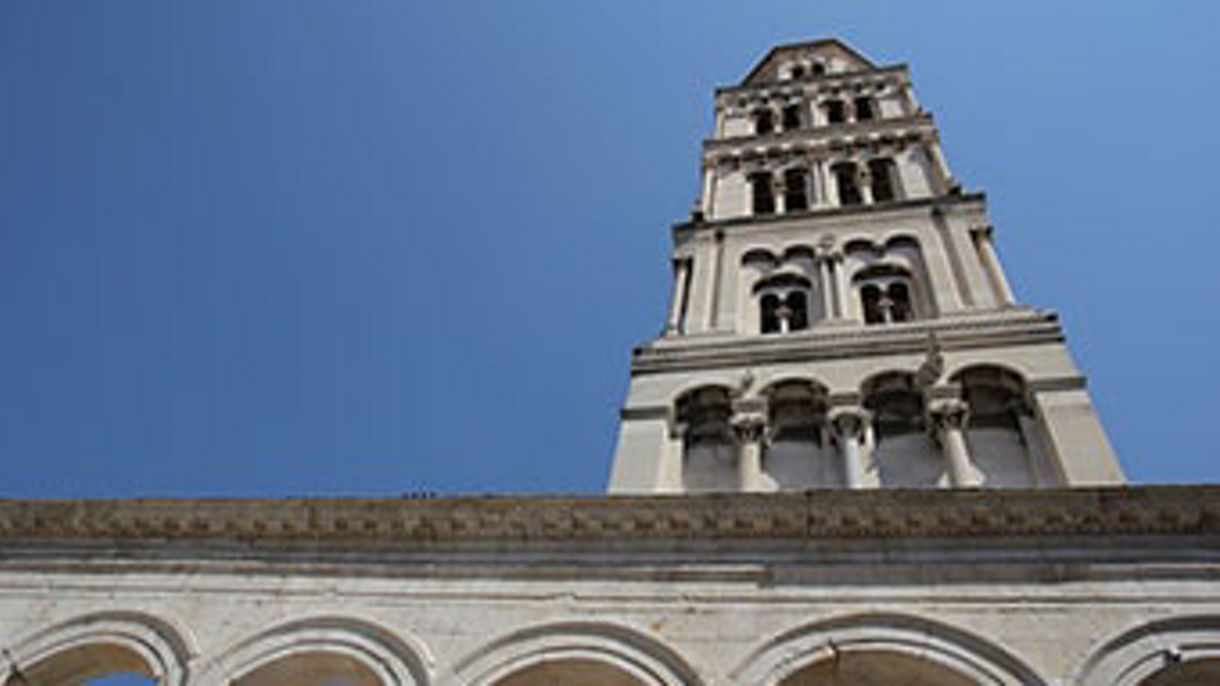
Located in the heart of Old Split, this 4th-century palace, built by the Roman emperor Diocletian in preparation for his retirement in 305 A.D., is a maze of cobbled lanes and courtyards that feature stone columns. The palace yields access to Diocletian's mausoleum in the Cathedral of St. Domnius (also known as St. Duje) next door. This incredible building, named after the patron saint of Split, features amazing views of the city and the Adriatic Sea as well as a bell tower that was constructed in 1100 A.D.
Cathedral of St. Duje (Patron saint of the city)
This well-preserved octagonal cathedral was built as a mausoleum for Diocletian, who was interred here in 311 A.D. In the 5th century, Christians destroyed the emperor's sarcophagus and in the 5th century converted the tomb into a church dedicated to St. Domnius, the patron saint of the city. A colonnade of 24 columns encircles the exterior of the cathedral, and the domed interior features a frieze that still includes images of Diocletian and his wife.
Old Town:
The streets of Old Town are a cornucopia of open-air markets. Fashionable boutiques are found on the marble-paved Marmontova Street, and the historic People's Square showcases the imposing City Hall building, which is painted bright red. The tiny streets yield to charming meeting places including the People's Square, with its clock tower and the City Hall.
What you will see along the way:
Relax on the 2-hour drive from Zadar to Split. Your walking tour through the palace complex includes the Temple of Jupiter, a 4th-century structure that features wonderful stone columns; the Golden Gate, the ornate main entrance to the palace; the Silver Gate, which was used as a defensive system; and Peristyle Square, the center square of the palace with columns shipped from Egypt and a Sphinx dating back 3,500 years.
Shopping:
Explore the city center of Split on your own, where the marketplace brims with fresh fruit, olive oils and wines. Knick-knacks, apparel and souvenirs are easily found.
Lunch:
Savor a traditional lunch at a local taverna.
Points of interest
Roman Palace of Emperor Diocletian
Old Town of Split
Special Notes
Tour requires walking over cobblestone streets, uneven surfaces, and varying slopes. Wear comfortable walking shoes. Modest attire is required; knees, shoulders and midriffs must be covered. Shorts are not allowed.
Exceptional Value
Book shore excursions with confidence! We offer competitive pricing, friendly service and unmatched destination expertise.
Moderate Activity
Includes meal
Be sure to read the Special Notes further down this page for important requirements and restriction.
What you will visit:
Split:
Medieval Split was built for the emperor Diocletian in his retirement, and the charms of the Dalmatian Riviera offer a blend of natural beauty and fascinating cultural sites to travelers today. The city itself is at least 1,700 years old, although recent archaeological research suggests that it might date back as far as the 6th century B.C. Enter Diocletian's Palace through its impressive arches and stroll around this 4th-century wonder that boasts grand courtyards, restaurants, shops, and narrow cobbled lanes.
The Palace of Diocletian:
Located in the heart of Old Split, this 4th-century palace, built by the Roman emperor Diocletian in preparation for his retirement in 305 A.D., is a maze of cobbled lanes and courtyards that feature stone columns. The palace yields access to Diocletian's mausoleum in the Cathedral of St. Domnius (also known as St. Duje) next door. This incredible building, named after the patron saint of Split, features amazing views of the city and the Adriatic Sea as well as a bell tower that was constructed in 1100 A.D.
Cathedral of St. Duje (Patron saint of the city)
This well-preserved octagonal cathedral was built as a mausoleum for Diocletian, who was interred here in 311 A.D. In the 5th century, Christians destroyed the emperor's sarcophagus and in the 5th century converted the tomb into a church dedicated to St. Domnius, the patron saint of the city. A colonnade of 24 columns encircles the exterior of the cathedral, and the domed interior features a frieze that still includes images of Diocletian and his wife.
Old Town:
The streets of Old Town are a cornucopia of open-air markets. Fashionable boutiques are found on the marble-paved Marmontova Street, and the historic People's Square showcases the imposing City Hall building, which is painted bright red. The tiny streets yield to charming meeting places including the People's Square, with its clock tower and the City Hall.
What you will see along the way:
Relax on the 2-hour drive from Zadar to Split. Your walking tour through the palace complex includes the Temple of Jupiter, a 4th-century structure that features wonderful stone columns; the Golden Gate, the ornate main entrance to the palace; the Silver Gate, which was used as a defensive system; and Peristyle Square, the center square of the palace with columns shipped from Egypt and a Sphinx dating back 3,500 years.
Shopping:
Explore the city center of Split on your own, where the marketplace brims with fresh fruit, olive oils and wines. Knick-knacks, apparel and souvenirs are easily found.
Lunch:
Savor a traditional lunch at a local taverna.
Points of interest
Roman Palace of Emperor Diocletian
Old Town of Split
Special Notes
Tour requires walking over cobblestone streets, uneven surfaces, and varying slopes. Wear comfortable walking shoes. Modest attire is required; knees, shoulders and midriffs must be covered. Shorts are not allowed.