MT. Koya and Buddhist Cuisine
Moderate Activity
Includes meal
Be sure to read the Special Notes further down this page for important requirements and restriction.
WHAT YOU VISIT
Okunoin Temple
The 1,000-year-old Okunoin Temple sits in a beautiful and peaceful forest atop sacred Mount Koya. It is here that the Shingon sect of Japanese Buddhism was introduced by Kobo Daishi, one of the country's most revered religious figures. His mausoleum is surrounded by 200,000 tombstones with stone pathways curving over one mile through a beautiful and peaceful forest setting.
Kongobuji Temple
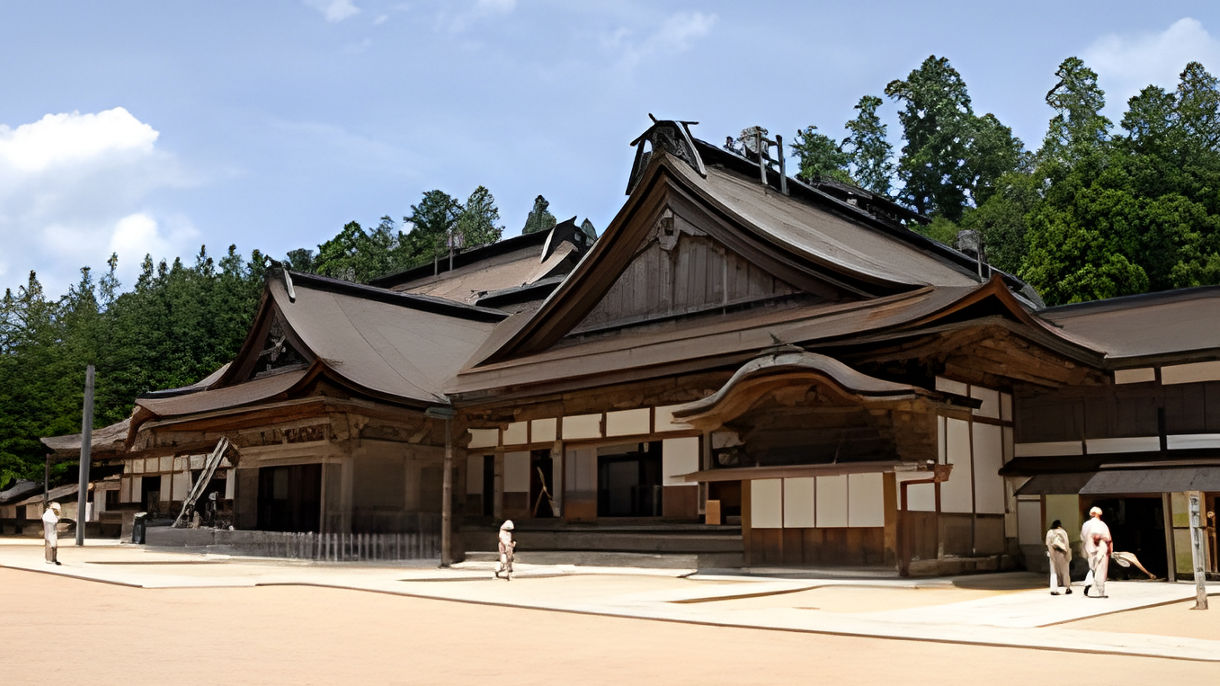
Kongobuji is the head temple of Koyasan Buddhism. Its name translates as "Temple of the Diamond Mountain." First built in 1593, it contains many beautiful painted sliding doors, extravagant receiving rooms, and a large kitchen with traditional stoves that can feed up to 2,000 people. The temple is adjacent to the Banryutei Rock Garden, Japan's largest. Built in 1984, its large rocks, representing dragons emerging from the clouds, originated in Shikoku, the birthplace of Kobo Daishi.
Garan Temple Complex
Its brilliant red main pagoda tower stands beside a 1,200-year-old pine tree that is said to have been here during Kobo Daishi's lifetime. Daishi established this temple as the dojo, or school, of the Shingon sect. There are nearly 20 structures clustered around the striking main pagoda, which serves as the symbol of Mount Koya.
PHOTO OPPORTUNITY
The temples are some of the most revered in Japan and photographs are not allowed.
MEAL
After visiting the Garan Temple Complex, you'll enjoy traditional Japanese Buddhist cuisine.
WHAT YOU SEE ALONG THE WAY
Feel the centuries unfold as you travel through along the Shikoku Pilgrimage, a 745-mile long trail associated with the 9th century Buddhist monk Kobo Daishi.
Points of interest
Kongobuji Temple
Okunoin Temple
Schedule
Special Notes
Shoes must be removed at Danjyo Garan and Kongo-buji Temple.
No photo inside the building of Danjo Garan, after Gobyono-bashi (main building area) and part of Kongo-buji temple (inside room).
Wear conservative which is considered as suitable for religious important venue.
Part of Kongo-buji Temple may be experiencing maintenance work.
This tour involves a substantial number of steps and uphill walking at Mt, Koya area; the tour is not considered suitable for guests with walking difficulties.
In Okunoin, the guest require to walk about 900meter from parking to Main hall of Okunoin.
We suggest you carry local currency. Tour order may vary.
Exceptional Value
Book shore excursions with confidence! We offer competitive pricing, friendly service and unmatched destination expertise.
Moderate Activity
Includes meal
Be sure to read the Special Notes further down this page for important requirements and restriction.
WHAT YOU VISIT
Okunoin Temple
The 1,000-year-old Okunoin Temple sits in a beautiful and peaceful forest atop sacred Mount Koya. It is here that the Shingon sect of Japanese Buddhism was introduced by Kobo Daishi, one of the country's most revered religious figures. His mausoleum is surrounded by 200,000 tombstones with stone pathways curving over one mile through a beautiful and peaceful forest setting.
Kongobuji Temple
Kongobuji is the head temple of Koyasan Buddhism. Its name translates as "Temple of the Diamond Mountain." First built in 1593, it contains many beautiful painted sliding doors, extravagant receiving rooms, and a large kitchen with traditional stoves that can feed up to 2,000 people. The temple is adjacent to the Banryutei Rock Garden, Japan's largest. Built in 1984, its large rocks, representing dragons emerging from the clouds, originated in Shikoku, the birthplace of Kobo Daishi.
Garan Temple Complex
Its brilliant red main pagoda tower stands beside a 1,200-year-old pine tree that is said to have been here during Kobo Daishi's lifetime. Daishi established this temple as the dojo, or school, of the Shingon sect. There are nearly 20 structures clustered around the striking main pagoda, which serves as the symbol of Mount Koya.
PHOTO OPPORTUNITY
The temples are some of the most revered in Japan and photographs are not allowed.
MEAL
After visiting the Garan Temple Complex, you'll enjoy traditional Japanese Buddhist cuisine.
WHAT YOU SEE ALONG THE WAY
Feel the centuries unfold as you travel through along the Shikoku Pilgrimage, a 745-mile long trail associated with the 9th century Buddhist monk Kobo Daishi.
Points of interest
Kongobuji Temple
Okunoin Temple
Schedule
Special Notes
Shoes must be removed at Danjyo Garan and Kongo-buji Temple.
No photo inside the building of Danjo Garan, after Gobyono-bashi (main building area) and part of Kongo-buji temple (inside room).
Wear conservative which is considered as suitable for religious important venue.
Part of Kongo-buji Temple may be experiencing maintenance work.
This tour involves a substantial number of steps and uphill walking at Mt, Koya area; the tour is not considered suitable for guests with walking difficulties.
In Okunoin, the guest require to walk about 900meter from parking to Main hall of Okunoin.
We suggest you carry local currency. Tour order may vary.