World Heritage Site Gokayama & Wood Carving Village
Moderate Activity
Be sure to read the Special Notes further down this page for important requirements and restriction.
Board your motor-couch and enjoy the excursion in Nanto city which includes fascinating regions.
Nanto is located in the Southwestern part of Toyama prefecture. Nanto is blessed with an abundance of natural scenery and around 80% of the area is woodland, the Shogawa river and the Oyabegawa rapids flow right through the city.
Today, you will visit one of world heritage site in the mountainous region, Gokayama Gasshozukuri villages
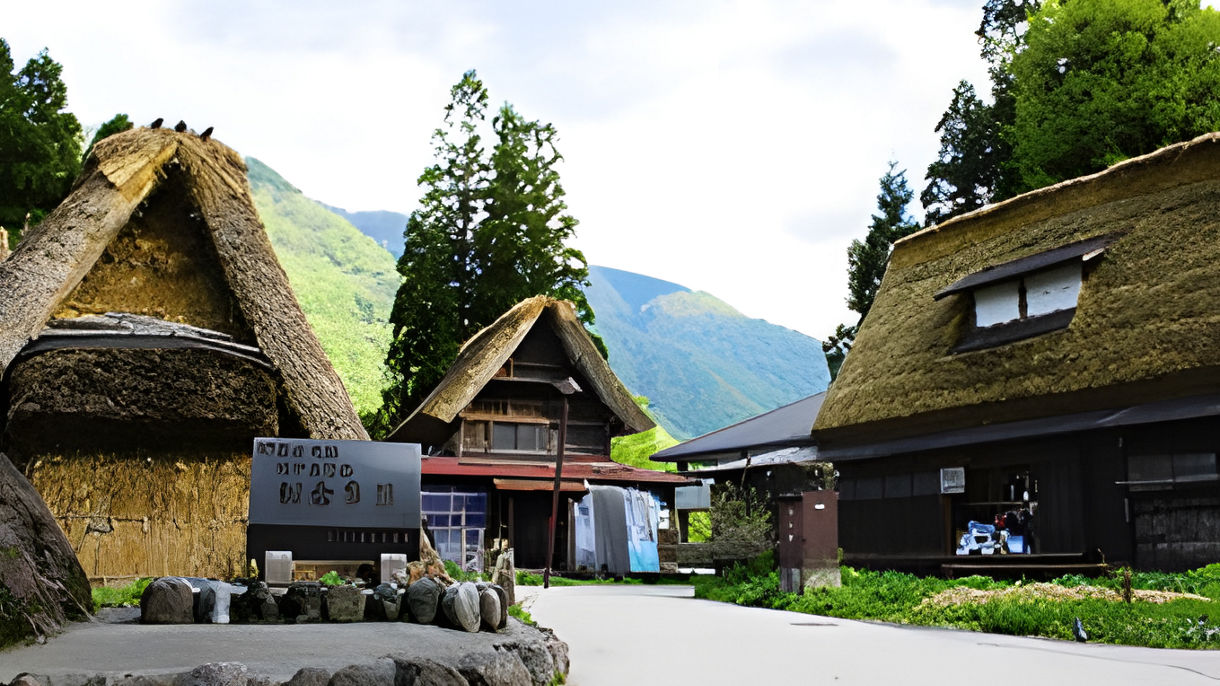
The Gokayama regions was declared as a UNESCO world heritage site in 1995, and now they are famous for their traditional gassho-zukuri farmhouses, some of which are more than 250 years old. Gassho-zukuri means "constructed like hands in prayer", as the farmhouses' steep thatched roofs resemble the hands of Buddhist monks pressed together in prayer. The architectural style developed over many generations and is designed to withstand the large amounts of heavy snow that falls in the region during winter. The roofs, made without nails, provided a large attic space used for cultivating silkworms.
This time you will visit one of the village, Ainokura, which is the most remote village in the Gokayama region. It is also the largest of the villages with nearly 20 gassho-zukuri farmhouses. Many of them remain private residences, although a few have been converted into restaurants, museums.
After Ainokura village, you will visit Inami city where is famous for wood carving. Yokamachi Street of the main road in the town and the stone-paved roads proceed straight out from the gate of magnificent Zuisenji Temple. You'll find the road lined with all sorts of interesting sites - carving / sculpting shops, a traditional toy shop, a sake brewery, and lattice-door houses in their beautiful simplicity. And whether you notice them or not, little touches like wooden railings and wood-carved bus signs serve to complete the calm, pleasant atmosphere of the town.
In the first year of the Meitoku era (1390), Zuisenji temple was opened by Shakunyo, the revered 5th generation priest of Honganji temple. The main temple building seen at present was rebuilt in the 18th year of the Meiji era (1885) by Inami's carvers, sculptors and carpenters, and is now the largest wooden pure Buddhist temple in the entire Hokuriku region. Be sure to take notice of the elaborate carvings adorning the façade of the temple gates as well. Most of them are the result of the painstaking labor of Inami's carpenters, and remain a hallmark of Inami woodcarving. On April 1st of the year Showa 40 (1965), the temple gate was designated as one of the prefecture's important cultural assets.
Then, return to the ship.
Points of interest
UNESCO World Heritage site "Gokayama"
Inami Woodcarving Village
Schedule
Special Notes
Guests must take off shoes if required at spots.
Guests must walk a a lot on this tour so that we do not recommend this tour for those who has any anxiety of walking.
Please bring the local currency for additional payments.
Exceptional Value
Book shore excursions with confidence! We offer competitive pricing, friendly service and unmatched destination expertise.
Moderate Activity
Be sure to read the Special Notes further down this page for important requirements and restriction.
Board your motor-couch and enjoy the excursion in Nanto city which includes fascinating regions.
Nanto is located in the Southwestern part of Toyama prefecture. Nanto is blessed with an abundance of natural scenery and around 80% of the area is woodland, the Shogawa river and the Oyabegawa rapids flow right through the city.
Today, you will visit one of world heritage site in the mountainous region, Gokayama Gasshozukuri villages
The Gokayama regions was declared as a UNESCO world heritage site in 1995, and now they are famous for their traditional gassho-zukuri farmhouses, some of which are more than 250 years old. Gassho-zukuri means "constructed like hands in prayer", as the farmhouses' steep thatched roofs resemble the hands of Buddhist monks pressed together in prayer. The architectural style developed over many generations and is designed to withstand the large amounts of heavy snow that falls in the region during winter. The roofs, made without nails, provided a large attic space used for cultivating silkworms.
This time you will visit one of the village, Ainokura, which is the most remote village in the Gokayama region. It is also the largest of the villages with nearly 20 gassho-zukuri farmhouses. Many of them remain private residences, although a few have been converted into restaurants, museums.
After Ainokura village, you will visit Inami city where is famous for wood carving. Yokamachi Street of the main road in the town and the stone-paved roads proceed straight out from the gate of magnificent Zuisenji Temple. You'll find the road lined with all sorts of interesting sites - carving / sculpting shops, a traditional toy shop, a sake brewery, and lattice-door houses in their beautiful simplicity. And whether you notice them or not, little touches like wooden railings and wood-carved bus signs serve to complete the calm, pleasant atmosphere of the town.
In the first year of the Meitoku era (1390), Zuisenji temple was opened by Shakunyo, the revered 5th generation priest of Honganji temple. The main temple building seen at present was rebuilt in the 18th year of the Meiji era (1885) by Inami's carvers, sculptors and carpenters, and is now the largest wooden pure Buddhist temple in the entire Hokuriku region. Be sure to take notice of the elaborate carvings adorning the façade of the temple gates as well. Most of them are the result of the painstaking labor of Inami's carpenters, and remain a hallmark of Inami woodcarving. On April 1st of the year Showa 40 (1965), the temple gate was designated as one of the prefecture's important cultural assets.
Then, return to the ship.
Points of interest
UNESCO World Heritage site "Gokayama"
Inami Woodcarving Village
Schedule
Special Notes
Guests must take off shoes if required at spots.
Guests must walk a a lot on this tour so that we do not recommend this tour for those who has any anxiety of walking.
Please bring the local currency for additional payments.