Volcanological Observatory & North Coast
Easy Activity
Be sure to read the Special Notes further down this page for important requirements and restriction.
During this fascinating half-day excursion, come to know the mesmerizing north coast of New Britain while learning about the area's many active and inactive volcanoes. The adventure kicks off with a scenic trip along Tunnel Hill Road through the center of Rabaul, which was smothered by falling ash during a massive volcanic eruption in 1994, leading the island's capital to be moved to Kokopo. Take in the ash-covered ruins of what was once the thriving center of town.
Continuing on, soak up the island's dramatic mountainous terrain and lush flora and fauna as your tour winds its way along the slopes of the Tovanumbatir (North Daughter), one of eight active vents in the Rabaul caldera, to reach the Volcanolagical Observatory. Established in 1937 after the catastrophic eruptions of two volcanoes destroyed Rabaul, this impressive scientific institute closely monitors Papua New Guinea's 14 active and 23 dormant volcanoes. In addition to learning about the country's tumultuous volcanic history, including the destructive eruption of Tavurvur and Vulcan in 1994, take in the awe-inspiring views from the institute, which rests high above beautiful Simpson Harbor, a near perfect circle and excellent venue for shipping.
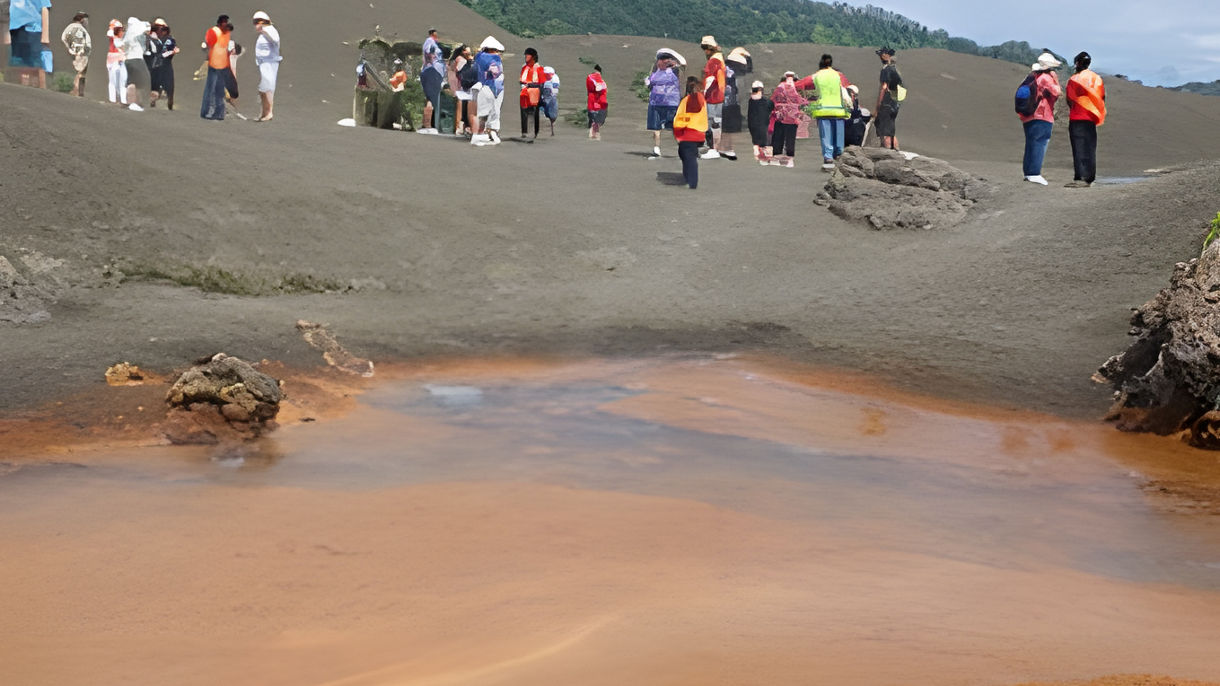
The journey continues at Mount Tavurvur, a sub-vent of the Rabaul Caldera. When this still huffing and puffing volcano erupted in 1937, over 500 people were killed. In 1994, the population was more prepared for the eruption, which went on for 12 days and resulted in only five deaths, one of the which was caused by lightning, a frequent occurrence with volcanic ash clouds. Down below, take in the steamy hot springs that locals call the "bubbling beach." These naturally sizzling pools are heated by a deep underwater volcanic vent that literally brings the water to a boil. Snap pictures of this amazing geothermal reaction. Nearby, visit a Tolai village to chat with its friendly inhabitants, who developed clever ways to adapt to life so close to the base of an active volcano.
Back on the road, travel to Rabaul Airport, which was destroyed by endless waves of falling ash and smoke during the '94 eruption. Although a new airport was built at Tokua, old Japanese warplanes half-buried in ash still remain. After taking pictures of the ash-covered wreckage, a testament to just how the powerful the volcanic eruption was, relish a picturesque journey back to your ship.
Points of interest
Volcanic Observatory
Schedule
Special Notes
Please note that the geothermal pools are naturally heated to a boil and under no circumstance should be attempted to be touched. Please follow instructions by your guide at all times. Guides are not professionally trained and may be shy, but they possess local knowledge.
Tour itinerary order may vary from group to group. Tour transportation is not equipped with air-conditioning or public address systems. Local roads may be unpaved, bumpy and dusty; passengers with back conditions should take this into consideration.
Exceptional Value
Book shore excursions with confidence! We offer competitive pricing, friendly service and unmatched destination expertise.
Easy Activity
Be sure to read the Special Notes further down this page for important requirements and restriction.
During this fascinating half-day excursion, come to know the mesmerizing north coast of New Britain while learning about the area's many active and inactive volcanoes. The adventure kicks off with a scenic trip along Tunnel Hill Road through the center of Rabaul, which was smothered by falling ash during a massive volcanic eruption in 1994, leading the island's capital to be moved to Kokopo. Take in the ash-covered ruins of what was once the thriving center of town.
Continuing on, soak up the island's dramatic mountainous terrain and lush flora and fauna as your tour winds its way along the slopes of the Tovanumbatir (North Daughter), one of eight active vents in the Rabaul caldera, to reach the Volcanolagical Observatory. Established in 1937 after the catastrophic eruptions of two volcanoes destroyed Rabaul, this impressive scientific institute closely monitors Papua New Guinea's 14 active and 23 dormant volcanoes. In addition to learning about the country's tumultuous volcanic history, including the destructive eruption of Tavurvur and Vulcan in 1994, take in the awe-inspiring views from the institute, which rests high above beautiful Simpson Harbor, a near perfect circle and excellent venue for shipping.
The journey continues at Mount Tavurvur, a sub-vent of the Rabaul Caldera. When this still huffing and puffing volcano erupted in 1937, over 500 people were killed. In 1994, the population was more prepared for the eruption, which went on for 12 days and resulted in only five deaths, one of the which was caused by lightning, a frequent occurrence with volcanic ash clouds. Down below, take in the steamy hot springs that locals call the "bubbling beach." These naturally sizzling pools are heated by a deep underwater volcanic vent that literally brings the water to a boil. Snap pictures of this amazing geothermal reaction. Nearby, visit a Tolai village to chat with its friendly inhabitants, who developed clever ways to adapt to life so close to the base of an active volcano.
Back on the road, travel to Rabaul Airport, which was destroyed by endless waves of falling ash and smoke during the '94 eruption. Although a new airport was built at Tokua, old Japanese warplanes half-buried in ash still remain. After taking pictures of the ash-covered wreckage, a testament to just how the powerful the volcanic eruption was, relish a picturesque journey back to your ship.
Points of interest
Volcanic Observatory
Schedule
Special Notes
Please note that the geothermal pools are naturally heated to a boil and under no circumstance should be attempted to be touched. Please follow instructions by your guide at all times. Guides are not professionally trained and may be shy, but they possess local knowledge.
Tour itinerary order may vary from group to group. Tour transportation is not equipped with air-conditioning or public address systems. Local roads may be unpaved, bumpy and dusty; passengers with back conditions should take this into consideration.