日本語ガイド付き:市内ドライブと仏光山
Moderate Activity
Includes meal
Be sure to read the Special Notes further down this page for important requirements and restriction.
Board your motorcoach for the approximately one-hour drive to Fokuangshan, traveling through rural countryside dotted with fruit orchards. Giant Buddha statues mark the approach to Fokuangshan.
Founded in 1967 by the venerable master Hsing Yun, Fokuangshan is a complex of meditation halls, shrines and gardens. Fokuangshan means "Buddha's Light Mountain," and the monastery is the headquarters for Humanistic Buddhism, which seeks to reconcile the various schools of Chinese Buddhism.
Continue to the Buddhist Cultural Museum, established in 1983. The Museum exhibits art and artifacts relating to the Buddha and Buddhism including sculpture, paintings, scrolls, sutra and reliquaries. It is one of the world's finest collections of Buddhist art. In 1998, the Tibetan Rinpoche Kunga Dorje donated the last remaining Buddha's Tooth to Fokuangshan. The relic is housed in the Buddha's Memorial Center. Four stupas symbolize the Four Noble Truths of Buddhism, while the eight Chinese pavilions denote the Eight-fold Path. The tooth is contained in a special shrine within.
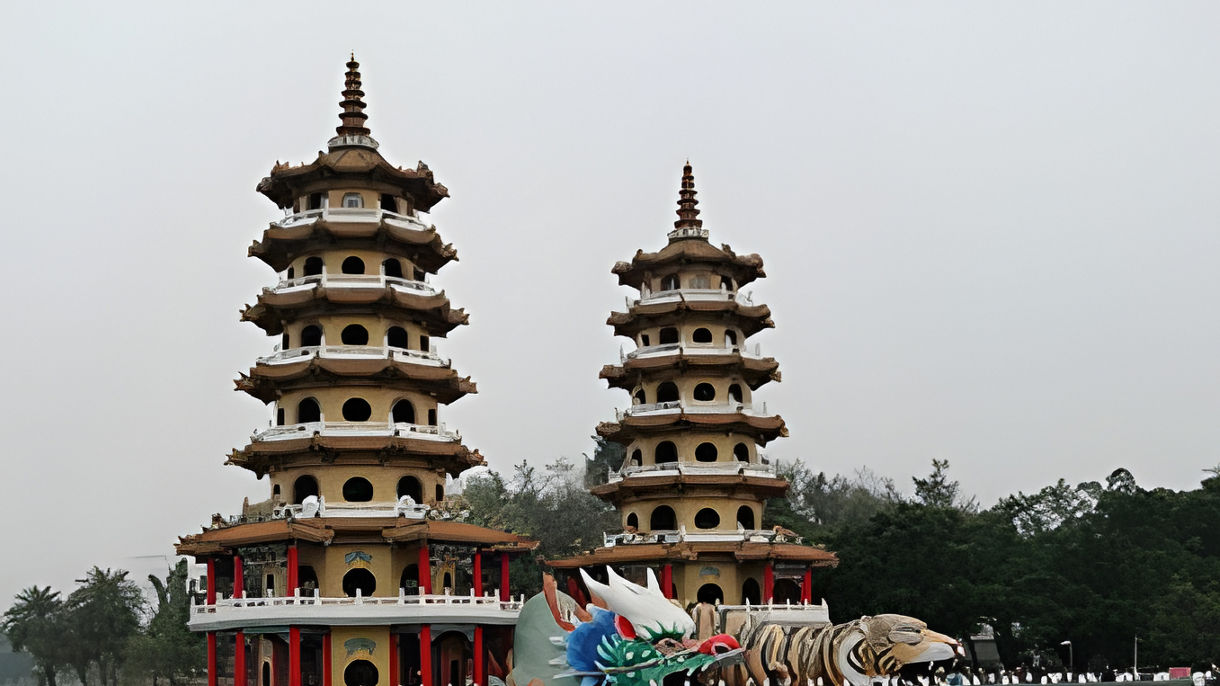
After a vegetarian lunch, board your coach for the return drive to Kaohsiung. Visit Lotus Lake for a closer look at Taiwan's gift for synthesizing old and new. The pagodas, pavilions and temples are all examples of classical Chinese architecture, yet the oldest dates to 1951. During your visit, explore the Spring and Autumn Pavilions dedicated to the God of War. The graceful Dragon and Tiger Pagodas feature interiors decorated with paintings depicting "China's 24 Obedient Sons."
Tzu-Chi temple is a magnificentTaoist shrine. The interior is filled with phantasmagorical depictions of the pantheon of Taoist deities. Those deities include both divinely-born gods, as well as major historical figures.
Your final destination is Kaohsiung National Stadium. Built as the main site of the 2009 World Games, the stadium features extensive use of recycled materials and is powered by solar energy. The sinuous-dragon-shaped stadium was designed by Japanese architect Toyo Ito.
Points of interest
Kaoshiung National Stadium
Lotus Lake
Fokuangshan Monastery
Schedule
Exceptional Value
Book shore excursions with confidence! We offer competitive pricing, friendly service and unmatched destination expertise.
Moderate Activity
Includes meal
Be sure to read the Special Notes further down this page for important requirements and restriction.
Board your motorcoach for the approximately one-hour drive to Fokuangshan, traveling through rural countryside dotted with fruit orchards. Giant Buddha statues mark the approach to Fokuangshan.
Founded in 1967 by the venerable master Hsing Yun, Fokuangshan is a complex of meditation halls, shrines and gardens. Fokuangshan means "Buddha's Light Mountain," and the monastery is the headquarters for Humanistic Buddhism, which seeks to reconcile the various schools of Chinese Buddhism.
Continue to the Buddhist Cultural Museum, established in 1983. The Museum exhibits art and artifacts relating to the Buddha and Buddhism including sculpture, paintings, scrolls, sutra and reliquaries. It is one of the world's finest collections of Buddhist art. In 1998, the Tibetan Rinpoche Kunga Dorje donated the last remaining Buddha's Tooth to Fokuangshan. The relic is housed in the Buddha's Memorial Center. Four stupas symbolize the Four Noble Truths of Buddhism, while the eight Chinese pavilions denote the Eight-fold Path. The tooth is contained in a special shrine within.
After a vegetarian lunch, board your coach for the return drive to Kaohsiung. Visit Lotus Lake for a closer look at Taiwan's gift for synthesizing old and new. The pagodas, pavilions and temples are all examples of classical Chinese architecture, yet the oldest dates to 1951. During your visit, explore the Spring and Autumn Pavilions dedicated to the God of War. The graceful Dragon and Tiger Pagodas feature interiors decorated with paintings depicting "China's 24 Obedient Sons."
Tzu-Chi temple is a magnificentTaoist shrine. The interior is filled with phantasmagorical depictions of the pantheon of Taoist deities. Those deities include both divinely-born gods, as well as major historical figures.
Your final destination is Kaohsiung National Stadium. Built as the main site of the 2009 World Games, the stadium features extensive use of recycled materials and is powered by solar energy. The sinuous-dragon-shaped stadium was designed by Japanese architect Toyo Ito.
Points of interest
Kaoshiung National Stadium
Lotus Lake
Fokuangshan Monastery